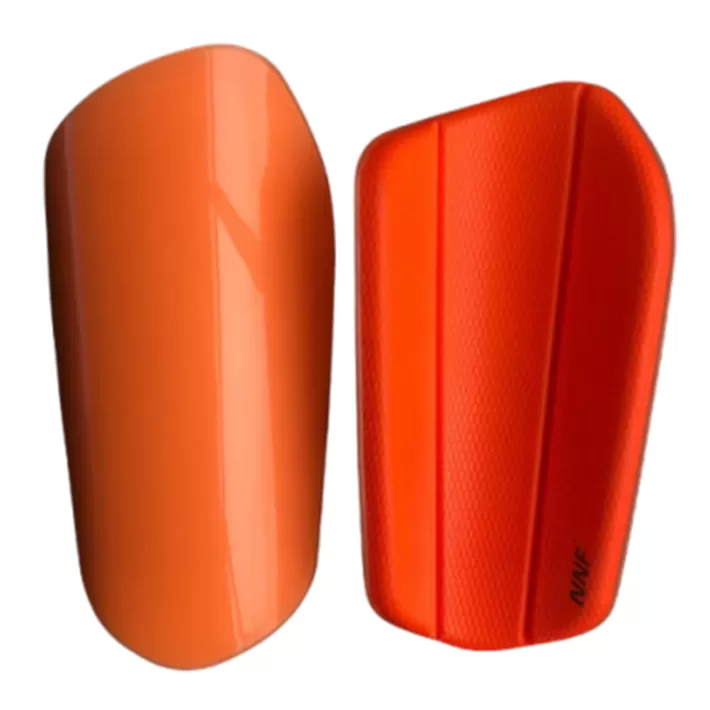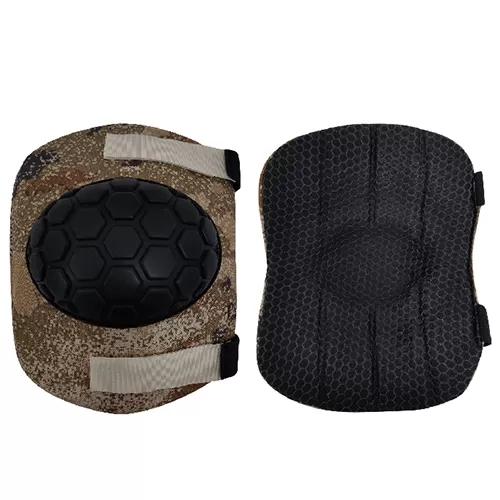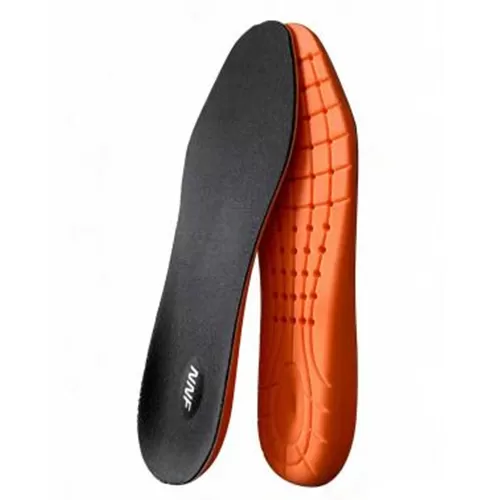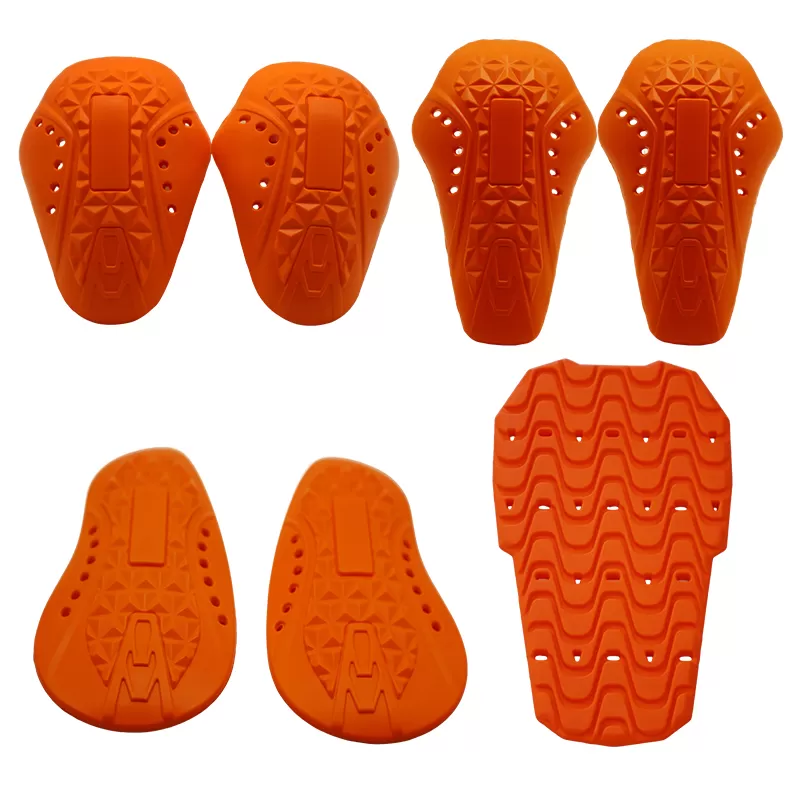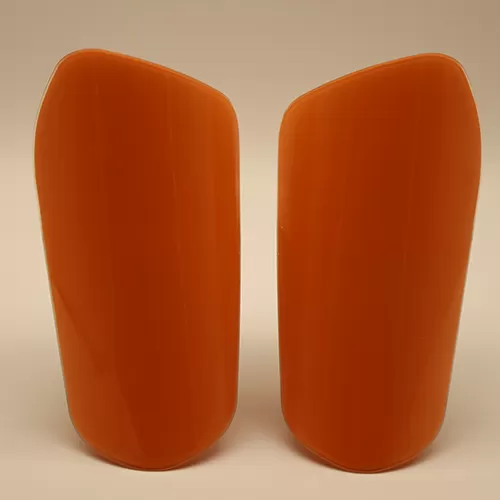
NNF-SA SERIES SOCCER SHIN GUARDS

“Too heavy.” “Too hard.” “Uncomfortable for long periods.”
These complaints explain an important shift in modern protection. Users still expect equipment to reduce impact, but they increasingly want protection that also supports natural movement, lower weight, and long-term wearing comfort.
Traditional protective gear based on rigid shells or conventional foam remains useful in many applications. The problem appears when greater protection is achieved mainly by adding thickness or stiffness. For sports, tactical activities, and other high-mobility environments, excessive bulk can reduce comfort and interfere with movement.
This is why adaptive impact technology is gaining attention. More importantly, the industry is moving beyond simply developing new materials toward engineering them into better finished protective gear.
NNF manufactures finished protectors, flexible liners, and molded protective components incorporating proprietary shear-thickening technology. NNF does not sell raw STF, foam sheets, rolls, or polymer compounds separately.
Protective equipment interacts with a body that is constantly bending, rotating, accelerating, and changing posture.
Conventional impact absorbing foam and rigid structures can provide cushioning and physical coverage, but increasing thickness or hardness may introduce trade-offs. Joint movement can become more restricted, heat can accumulate, and additional weight can contribute to fatigue during extended wear.
The issue is especially noticeable around moving areas such as the knees, elbows, shoulders, and back.
Modern protection therefore needs to answer two questions at the same time:
Can the product manage impact effectively, and can the wearer move naturally while using it?
This shift is changing how manufacturers evaluate body protection. Instead of judging protection only by the material, they increasingly consider the complete finished product—its geometry, thickness, fit, flexibility, and integration.
One technology used in next-generation protection is shear thickening fluid, a non-Newtonian system whose response changes according to applied force.
In simplified terms, a shear-thickening structure can remain relatively flexible during normal movement and increase its resistance when subjected to sudden impact.
That behavior can help address the traditional conflict between mobility and protection.
However, the material itself is only one part of the solution. A successful protector still requires appropriate molding, body contour, thickness, ventilation, and structural integration.
That distinction is important for buyers: adaptive material does not automatically equal effective protective gear. The performance must be engineered into a finished product.
| Factor | Traditional Protective Gear | Adaptive Finished Protective Gear |
|---|---|---|
| Normal movement | May become bulky or rigid | Designed to remain flexible |
| Impact response | Primarily fixed mechanical behavior | Response changes under sudden force |
| Comfort | Depends heavily on thickness and stiffness | Can balance flexibility and protection |
| Body fit | Conventional flat or shaped padding | Can use anatomically molded structures |
| Product design | Foam or rigid shell dominated | Material, geometry, and structure work together |
| Best evaluation method | Material and thickness | Complete finished protector |
The goal is not to claim that traditional protection is obsolete. EVA, PE, EPS, and rigid structures still have appropriate applications.
Adaptive designs simply give product engineers another way to balance protection, mobility, and comfort.
NNF applies its technology to multiple types of finished protection rather than offering it as standalone raw material. Its current portfolio includes sports, body, military, and other protective applications.
Riding and skiing involve frequent body movement combined with the possibility of sudden high-energy impact.
NNF's motorcycle and ski protective gear is designed as finished built-in protection for these applications. The current NNF-ME series integrates non-Newtonian impact technology into finished protectors and lists EN1621 testing on the product page.
Soccer players need shin protection without unnecessary bulk or restriction.
NNF's soccer protective gear uses a one-piece molded shin-guard structure rather than conventional glue and stitching assembly. Its product page also lists EN13061 and NOCSAE testing.
Some applications require protection that follows the body continuously rather than sitting inside a rigid shell.
NNF's wearable protective gear is designed around flexible everyday movement while incorporating shear-thickening impact technology into the finished wearable protector.
Buyers can also review the complete sports protective gear range for motorcycle, skiing, soccer, rugby, baseball, and wearable applications.
One of the biggest misconceptions around advanced protection is that selecting the right energy absorption material is enough.
In reality, impact performance depends on the whole system.
A material must be incorporated into the correct shape and thickness. The protector must cover the intended body area, remain stable during movement, and fit correctly inside clothing, helmets, or other equipment.
This is why NNF focuses on finished impact-absorbing protectors and components.
Rather than requiring brands to purchase STF and develop the protection structure themselves, NNF integrates its proprietary technology into finished products that can be evaluated around real application requirements.
For OEM/ODM projects, NNF also supports custom protective gear development based on product drawings and intended applications.
The first question should be the application: what body area is being protected, what type of movement is expected, and how will the protector be integrated into the final equipment?
Buyers should then compare protection performance with practical wearing factors such as thickness, weight, flexibility, fit, and environmental conditions.
Testing also matters. Instead of relying only on claims such as “smart material” or “high impact resistance,” buyers should review the relevant finished-product test information for the intended application.
For custom development, dimensions, drawings, integration method, target quantity, and required test standards should ideally be defined before the protective structure is finalized.
No. Conventional foam and rigid structures remain suitable for many applications. Adaptive protection is especially useful where buyers need to balance impact management with flexibility and mobility.
No. NNF supplies finished protective gear, molded protectors, and flexible protective components incorporating its proprietary technology rather than selling raw STF separately.
NNF's current portfolio includes motorcycle and ski protectors, soccer shin guards, wearable sports protection, body protectors, and military protective products.
Yes. NNF's customization page describes product development around customer drawings and finished protective applications.
Users are not abandoning protection—they are demanding better protective gear.
Modern equipment needs to protect against impact while remaining wearable enough for real movement and extended use. This is driving the transition from purely rigid or static structures toward more adaptive protective systems.
NNF applies shear-thickening technology inside the finished protective gear it manufactures, including sports protectors, wearable protection, body guards, and other molded protective components.
For brands and equipment manufacturers, the goal is therefore not to source an advanced raw material. It is to choose or develop a finished protector that delivers the right combination of impact protection, mobility, fit, and comfort.