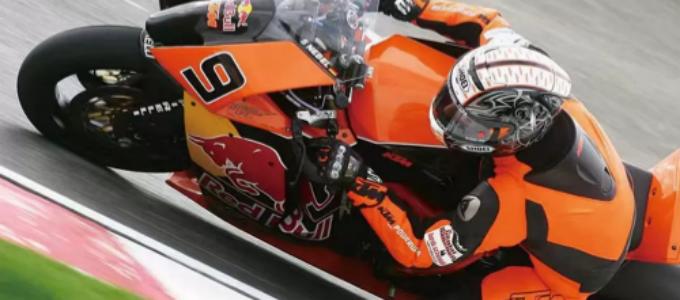
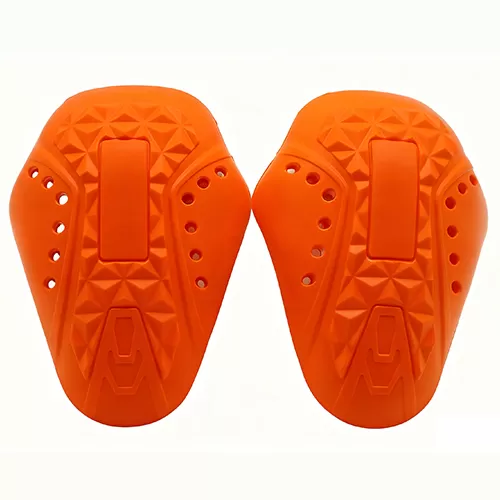
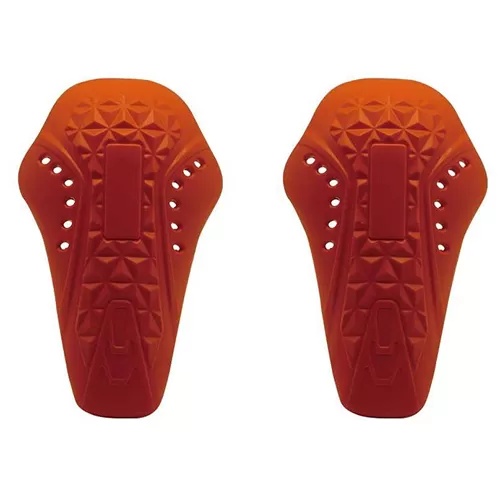
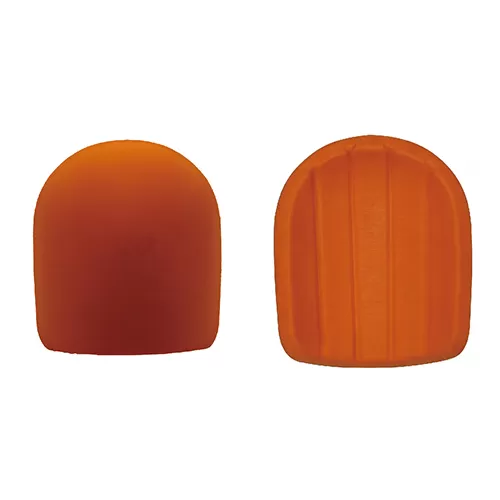
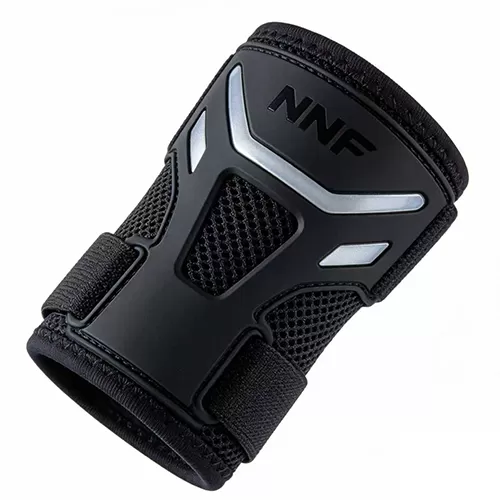
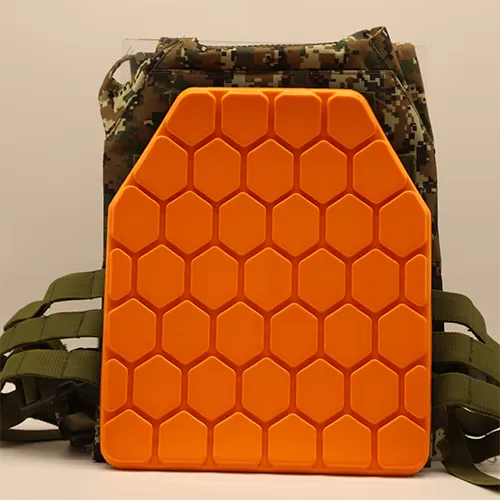
SHOULDER GUARD - MOTORCYCLE CLOTHING/ SKI WEAR AND OTHER BUILT-IN PROTECTIVE GEAR

Modern body protection faces a difficult challenge: protective equipment must manage sudden impact without becoming so rigid, heavy, or bulky that it interferes with natural movement.
From motorcycle riding and skiing to tactical operations and industrial work, the human body may experience compression, twisting, falls, repeated contact, and impacts from different directions. Conventional foam and rigid-shell structures remain useful, but modern applications increasingly demand a better balance between protection, flexibility, fit, and comfort.
This is driving a new generation of adaptive protection technologies. Yet the real revolution is not simply about developing a new impact protection material. It is about engineering that technology into better finished protective gear.
NNF manufactures finished body protectors, flexible liners, and molded protective components using proprietary shear-thickening technology. Raw STF, foam sheets, rolls, and polymer compounds are not sold separately.
Different body areas respond differently to impact, so effective body protection gear cannot rely on one universal pad.
The back and spine require broad coverage and controlled flexibility. The chest needs impact protection without excessive restriction, while shoulders, elbows, and knees must remain protected through repeated joint movement.
This is why NNF's body protection gear is developed around specific anatomical areas rather than a single generic protective structure. The current product range includes protection for the head, shoulders, chest, back, elbows, hands, knees, shins, and feet.
For buyers, this means the correct question is not simply “Which material absorbs the most energy?” It is “Which finished protector provides the right coverage, movement, and integration for this body area?”
Conventional EVA, PE, EPS, and rigid plastic structures continue to have valid protective applications. Their limitation is that their mechanical response is relatively fixed.
Increasing thickness or hardness may improve certain aspects of protection, but it can also increase bulk and reduce flexibility. This trade-off becomes particularly noticeable around mobile areas such as the knees, elbows, shoulders, and back.
Adaptive technologies offer another design approach. Instead of relying only on greater thickness or rigidity, the protective system can respond differently during normal movement and sudden impact.
That makes them especially interesting for equipment where protection and mobility must coexist.
A shear-thickening fluid is a non-Newtonian system whose resistance changes according to the force applied.
In simplified terms, the system can remain relatively flexible during normal movement while becoming more resistant under rapid deformation or impact.
For body protection, however, the fluid itself is not the finished solution.
Its practical performance depends on how it is integrated into a stable protective structure, including the geometry, thickness, body contour, ventilation design, and surrounding components.
This is why NNF uses its proprietary technology inside the finished protectors it manufactures, rather than supplying the raw STF as an independent product.
A useful way to understand this transition is to compare material technology with the actual protective product.
| Body Area | Finished Protection | Main Design Priority |
|---|---|---|
| Back | Back protector | Coverage, flexibility, body contour |
| Chest | Chest protector | Impact protection with low restriction |
| Knees | Knee protector | Joint mobility and stable positioning |
| Shoulders | Shoulder protector | Anatomical fit and movement |
| Elbows | Elbow protector | Flexibility during repeated bending |
The back is a large, constantly moving area, so protection needs to follow body posture while maintaining adequate coverage.
NNF's back protector is designed as finished built-in protective gear for applications including motorcycle clothing and ski wear. The current product page also lists EN1621 testing information.
The knee presents a different engineering challenge because the protector must repeatedly bend with the joint.
NNF's knee protector integrates its impact technology into a finished body-contoured component rather than supplying the impact-absorbing material separately. Its product page likewise positions it for motorcycle and ski protective applications.
Chest, shoulder, and elbow protection must balance targeted coverage with freedom of movement.
The same underlying adaptive technology therefore cannot simply be reproduced in the same shape for every body area. Each finished protector requires different geometry and integration according to its intended use.
The original idea behind a “materials revolution” can easily lead buyers to focus too much on terms such as energy absorption material, impact resistant material, or shock absorption material.
But material chemistry alone does not determine the final result.
A high-performance material still needs to be converted into the right shape, thickness, structure, and fit. The protector must remain correctly positioned during movement and integrate properly with clothing, helmets, or other equipment.
For this reason, NNF's commercial focus is on finished impact-absorbing protectors and protective gear, not raw material supply.
This distinction also simplifies development for protective equipment brands: instead of buying an STF formulation and building a protector from the beginning, they can work around the required finished component.
Body protection often needs to match a specific garment, body area, application, or brand design.
NNF supports custom protective gear development for OEM/ODM projects. The company's customization workflow covers product design and finished protective applications rather than standalone raw-material supply.
Buyers can define factors such as the protected area, dimensions, thickness, structure, fit, ventilation, and integration method before moving toward tooling and production.
This makes customization particularly useful where an existing standard protector does not match the intended apparel or equipment design.
The future of protection is unlikely to depend on one “miracle material.”
Instead, stronger solutions will combine adaptive material behavior with smarter structural design, anatomical fit, lightweight construction, and application-specific engineering.
Traditional foams and hard shells will continue to have important roles. The change is that designers now have additional tools for balancing mobility and impact management rather than simply increasing thickness or hardness.
This represents a broader shift from passive padding toward responsive protective systems.
No. NNF manufactures and supplies finished protective gear, molded protectors, and flexible liners. Raw STF and unprocessed impact-absorbing materials are not sold separately.
NNF's range includes finished head, shoulder, chest, back, elbow, hand, knee, shin, and foot protection.
No. Conventional materials remain suitable for many applications. Adaptive technology provides another option where flexibility, mobility, and impact response must be balanced.
Yes. NNF supports OEM/ODM development of finished protective components according to product and integration requirements.
The next generation of human protection is not simply about discovering a more advanced material.
The real innovation lies in turning adaptive material behavior into finished protective gear that fits the body, moves naturally, and is engineered for the impact conditions of a specific application.
NNF develops proprietary shear-thickening technology and integrates it into finished body protectors, flexible liners, and molded protective components.
NNF does not sell raw STF materials separately. For brands and equipment manufacturers, the focus is therefore on selecting or developing the right finished protector—not sourcing the raw material behind it.