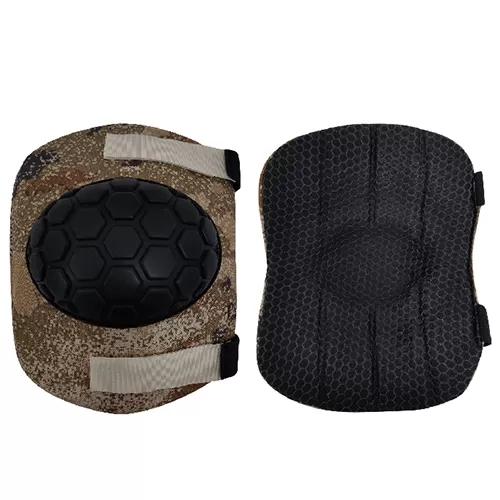
KNEE GUARD - MOTORCYCLE CLOTHING/ SKI WEAR AND OTHER BUILT-IN PROTECTIVE GEAR

Motorcycle protection has always involved a difficult trade-off: riders need enough impact protection for serious falls, but the gear also needs to remain flexible, lightweight, and comfortable during normal riding.
As motocross, enduro, and high-speed road riding place greater demands on protective equipment, engineers are increasingly looking beyond conventional padding. One technology gaining attention is shear thickening material, a type of non-Newtonian system that can respond differently under normal movement and sudden impact.
The important development, however, is not simply the material itself. The real value comes from integrating this technology into finished motorcycle protective gear that is shaped, tested, and engineered for specific body areas.
NNF develops proprietary shear-thickening technology and integrates it into finished protectors, liners, and molded protective components. Raw STF, foam sheets, rolls, and polymer compounds are not sold separately.
A common question is: what is non newtonian fluid?
Unlike a conventional fluid with relatively predictable viscosity, a non-Newtonian fluid changes its flow behavior depending on the forces applied to it.
One relevant example is a dilatant or shear-thickening system. In simplified terms:
during normal movement, it remains relatively flexible;
under sudden shear or impact, its resistance increases.
This dilatant flow behavior is why shear-thickening systems are being explored for impact protection.
In motorcycle applications, however, riders are not wearing loose fluid. The technology must be incorporated into a stable protective structure that can be molded, positioned, and integrated into riding equipment.
That engineering step is what turns an interesting material property into practical protection.
Traditional motorcycle armor often relies on EVA, PE, or other forms of impact absorbing foam. These materials remain useful and can provide effective protection when properly designed.
The challenge is that conventional padding normally has a relatively fixed mechanical response. Increasing protection may require changes in thickness, density, or structure, which can also increase bulk or reduce flexibility.
Motorcycle protection therefore has to balance several factors:
impact management;
flexibility around moving joints;
low unnecessary weight;
stable positioning;
compatibility with jackets, pants, and other riding equipment.
A thicker pad is not automatically a better protector. The finished product must remain correctly positioned and comfortable enough to be worn consistently.
NNF does not position shear-thickening material as a standalone product for motorcycle brands to process themselves.
Instead, the technology is integrated into finished motorcycle protective gear designed for motorcycle clothing, ski wear, and related impact-protection applications.
This product-focused approach combines material behavior with protector geometry, thickness, body contour, surface structure, and manufacturing consistency.
During normal movement, the protector is designed to remain flexible enough to support riding comfort. Under sudden impact, the integrated shear-thickening system increases resistance and contributes to impact-energy management.
The result is not simply a “smart material.” It is a complete protective component engineered around the rider.
Different body areas require different protector designs.
| Body Area | Finished Protector | Main Design Requirement |
|---|---|---|
| Back | Back protector | Coverage and flexibility |
| Chest | Chest protector | Impact protection without excessive bulk |
| Knees | Knee protectors | Joint mobility and secure positioning |
| Elbows | Elbow protectors | Flexibility during repeated bending |
| Shoulders | Shoulder protectors | Body contour and garment integration |
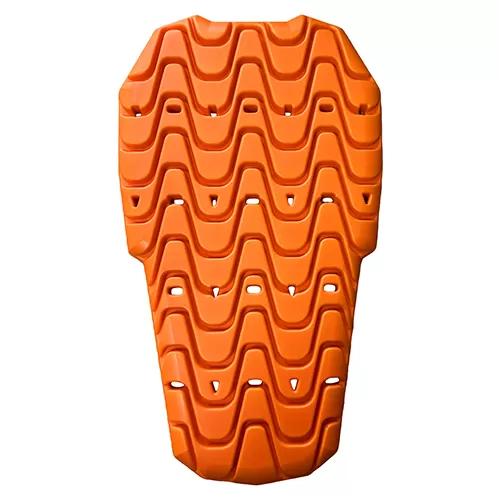
A motorcycle back protector needs to cover a relatively large area while still following the rider's posture.
Its effectiveness therefore depends not only on the impact-absorbing core, but also on thickness, shape, flexibility, and how securely it remains positioned inside the riding garment.
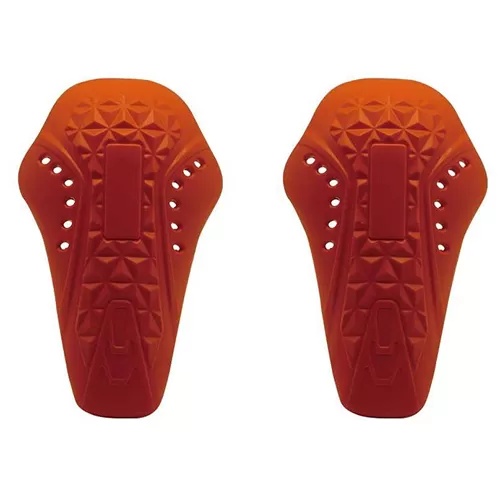
Knees and elbows present a different challenge because they move constantly.
NNF's knee protectors are designed as finished built-in protective components for motorcycle clothing and related applications.
For these joint areas, an effective protector should bend naturally during riding while remaining centered over the intended impact zone.
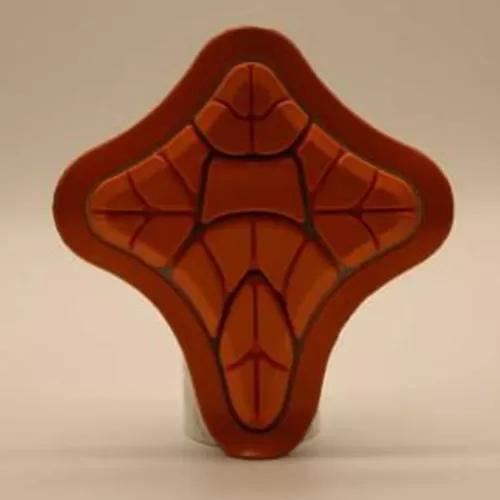
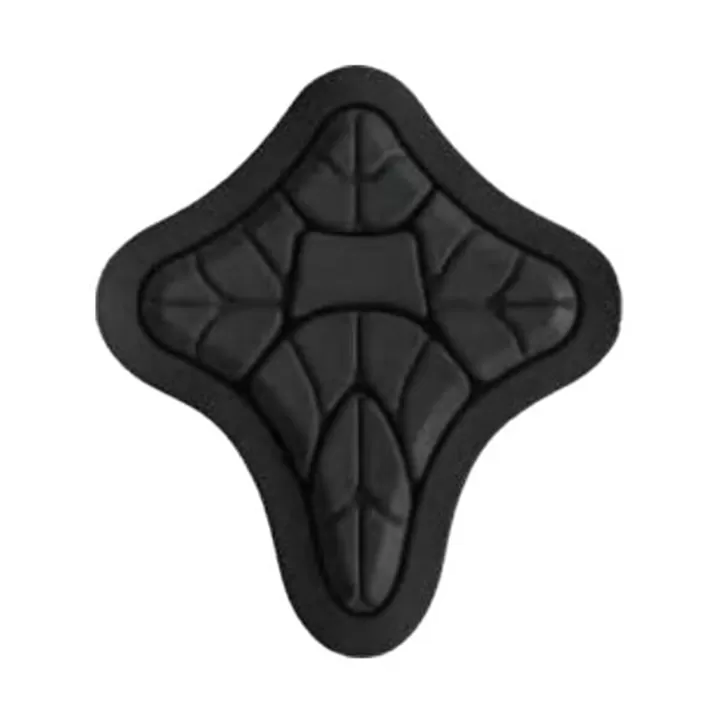
Chest and shoulder protectors must provide targeted protection without unnecessarily restricting upper-body movement.
This makes anatomical shaping particularly important. The protector needs to work as part of the garment rather than simply acting as a flat layer of shock absorption material.
Searching for terms such as non newtonian fluid material, energy absorption material, or impact resistant material can make motorcycle protection seem like a simple material-selection problem.
In reality, the final performance depends on much more.
A shear-thickening formulation must be stabilized, incorporated into a suitable structure, molded into the correct geometry, and manufactured consistently. The protector then needs to fit the intended body area and integrate correctly with the riding equipment.
This is why NNF focuses on finished impact-resistant padding and protective components instead of selling the underlying raw material separately.
For motorcycle brands and equipment manufacturers, that reduces the need to develop an STF-based protection system from scratch.
Advanced protection can cost more than basic conventional padding because the finished product may involve specialized formulations, molding processes, testing, and tighter manufacturing control.
But buyers should avoid comparing products only according to raw material cost.
A more useful comparison considers the complete protector:
required protection level;
thickness and weight;
rider mobility;
product durability;
integration with the final garment;
manufacturing consistency.
For OEM projects, the objective should be to achieve the required protection and fit at an appropriate total product cost rather than simply choosing the cheapest padding.
NNF supports customized finished protectors for brands developing motorcycle apparel and other protective equipment.
Before sourcing a smart protector, brands should first define the application.
A back protector, knee guard, and shoulder protector require different shapes and movement characteristics. Buyers should therefore provide information such as the protected body area, available dimensions, target thickness, garment integration method, expected quantity, and relevant test requirements.
NNF's customization process focuses on the finished protective component rather than standalone material supply.
This helps ensure that the shear-thickening technology, structural design, and final riding application are developed together.
Shear-thickening technology is changing motorcycle protection, but the shift is not simply from one material to another.
The more meaningful evolution is from passive padding toward adaptive finished protective systems that combine impact management with flexibility, ergonomic design, and rider comfort.
NNF integrates proprietary shear-thickening technology into finished motorcycle protective gear, including back, knee, chest, shoulder, and other body protectors.
NNF sells finished protective gear and molded protective components, not raw STF or unprocessed impact-absorbing materials.
For motorcycle brands and protective equipment manufacturers, this means the focus can remain where it belongs: on creating a finished protector that delivers the right balance of protection, fit, mobility, and integration for the rider.