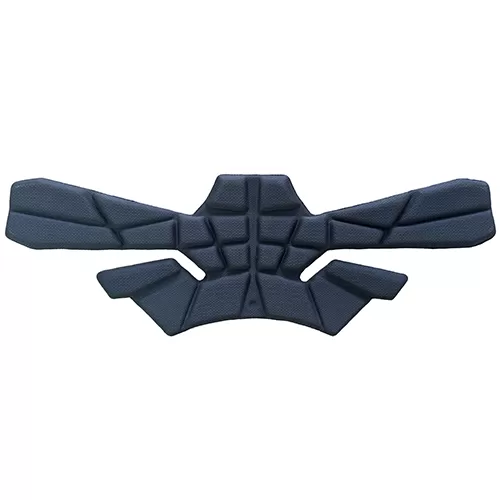
NNF-RB SERIES Head Guard Helmet Liner

Modern skiing places very different demands on protective equipment than controlled indoor sports. Riders may move rapidly between soft snow, packed ice, steep terrain, jumps, and unexpected obstacles, while a single fall can involve several impacts rather than one simple collision.
Traditional protective gear remains valuable, but modern snow sports increasingly require a better balance between impact protection, flexibility, low weight, and freedom of movement.
This is where responsive material systems are becoming important. Technologies such as shear-thickening systems can change their mechanical response under sudden force, creating new possibilities for ski protective gear.
However, the real innovation is not the material alone. It is how that technology is engineered into a finished protector that fits the body, works in cold environments, and remains comfortable during active movement.
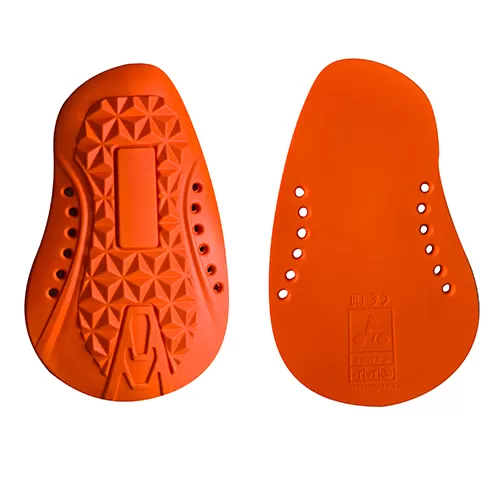
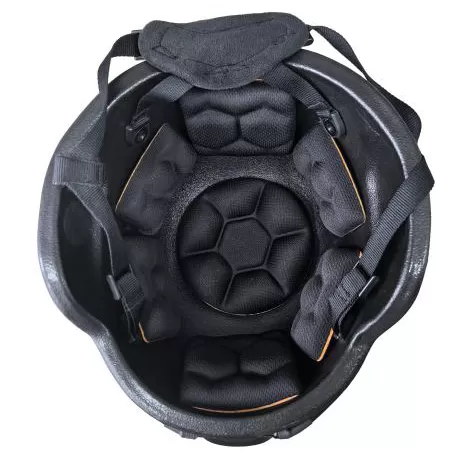
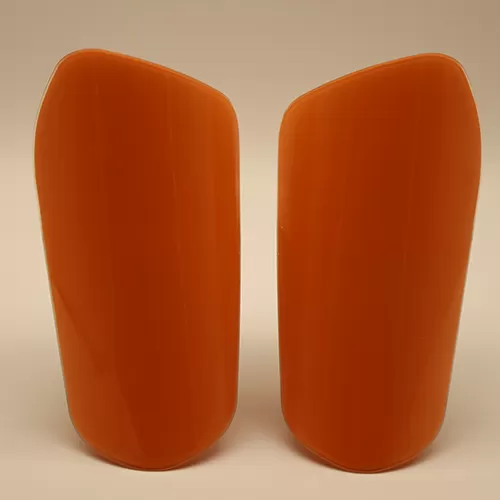
NNF manufactures finished ski protectors, liners, and molded protective components using proprietary shear-thickening technology. Raw STF, foam sheets, rolls, and polymer compounds are not sold separately.
Ski falls are rarely predictable.
A skier may initially strike the snow, continue sliding, rotate, and then experience a secondary impact with ice, terrain features, or equipment. This means protection may need to manage changing forces while still allowing the athlete to move naturally before any impact occurs.
Traditional EVA, PE, EPS, and rigid protection can perform effectively when appropriately designed. The limitation is that their mechanical response is relatively fixed.
Increasing thickness or rigidity may provide additional protection in some situations, but it can also add bulk and interfere with body movement.
For skiing, the challenge is therefore not simply to create the hardest protector. It is to engineer protection that works when the skier is moving and when an impact suddenly occurs.
A shear thickening fluid is a non-Newtonian system whose resistance increases when subjected to rapid deformation or shear.
In simplified terms:
during normal movement, the system remains relatively flexible;
during sudden impact, resistance increases;
after the force is removed, it returns toward its flexible state.
This behavior can help protective equipment balance mobility with impact management.
But a skier does not wear the raw material itself. The technology must be integrated into a stable protective structure with the correct geometry, thickness, ventilation, and anatomical fit.
That is why NNF applies its responsive technology within finished protectors rather than supplying it as a standalone material.
Modern protection works best when material behavior and product structure are designed together.
| Body Area | Finished Protector | Main Ski Protection Requirement |
|---|---|---|
| Back | Back protector | Large-area coverage with flexibility |
| Knees | Knee protector | Joint mobility and stable positioning |
| Chest | Chest protector | Impact coverage without excessive bulk |
| Shoulders | Shoulder protector | Anatomical fit and upper-body movement |
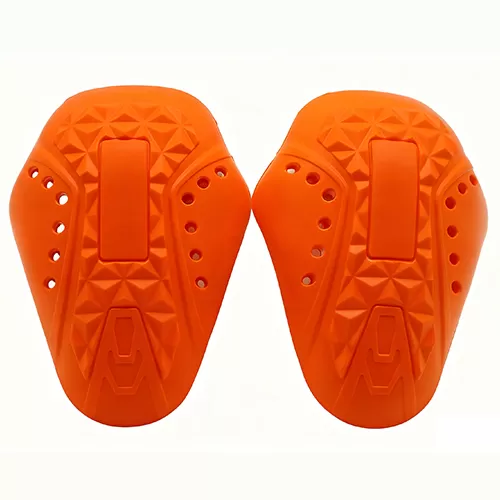
NNF's motorcycle and ski protective gear integrates its impact-absorbing technology into finished NNF-ME protectors intended for built-in protective applications. The current product page also lists EN1621 testing under normal, high-temperature, wet-aging, and -10℃ low-temperature conditions.
This finished-product approach is particularly important in snow sports because the protector must function as part of the clothing or protective system—not as an isolated material layer.
The back combines a large protection area with constant bending, rotation, and changes in posture.
A ski back protector therefore needs to provide coverage without making normal skiing movements unnecessarily difficult.
Protector geometry matters just as much as the impact-absorbing core. A suitable design should follow the back, remain correctly positioned, and integrate comfortably into the intended ski apparel.
NNF's finished back protector is positioned for motorcycle clothing, ski wear, and other built-in protective applications.
This illustrates an important principle: advanced material behavior only becomes useful when it is engineered into a product that fits the protected body area.
Knees face a different problem because they continuously flex throughout skiing.
A protector that is too bulky or poorly shaped may interfere with movement or shift away from the intended protection area.
NNF's knee protector is designed as a finished built-in protective component for motorcycle and ski applications.
For skiing, an effective knee protector should therefore be evaluated not only by impact performance but also by how naturally it bends, how securely it remains positioned, and how well it fits inside the surrounding apparel.
Snow protection has an environmental challenge that many other sports do not: prolonged exposure to low temperatures.
Protective structures that perform well at room temperature may behave differently in cold conditions. Flexibility, stiffness, and comfort can all change as temperature falls.
For this reason, buyers should review the environmental test conditions associated with the finished protector rather than relying only on general material claims.
NNF's NNF-ME product page lists impact testing under several environmental conditions, including a -10℃ low-temperature test, which is particularly relevant when evaluating products intended for ski applications.
Terms such as impact absorption material, impact resistant material, and energy absorption material are useful when explaining protection technology, but they should not be the final purchasing criterion.
The performance of ski protection depends on the entire system: material response, thickness, body contour, placement, flexibility, and integration with the final apparel.
NNF therefore focuses on finished ski protective gear and impact-absorbing protectors, rather than raw-material trading.
For sports brands, this means they do not need to purchase STF and engineer the protection system independently. They can instead evaluate or develop a finished protector around their actual apparel and performance requirements.
Yes. Ski apparel and protective equipment often differ in internal space, body coverage, thickness, and design requirements.
NNF supports custom protective gear development for OEM/ODM projects. Buyers can provide product drawings and application requirements so that protector geometry, thickness, ventilation, flexibility, and integration can be developed around the finished product.
The goal is not to customize a raw material for resale, but to engineer the material technology into an application-ready protective component.
The evolution of ski protection is not simply a transition from traditional foam to a new material.
It is a shift from static protection toward responsive finished protective systems that combine material intelligence with anatomical design, mobility, environmental performance, and product integration.
NNF applies proprietary shear-thickening technology within finished ski protective gear, including back, knee, chest, shoulder, and other built-in protectors.
NNF supplies finished protective gear and impact-absorbing protective components; raw STF and unprocessed impact-absorbing materials are not sold separately.
For ski brands and protective equipment manufacturers, the real opportunity is therefore not to source a new material—it is to develop a better finished protector for the mountain.